
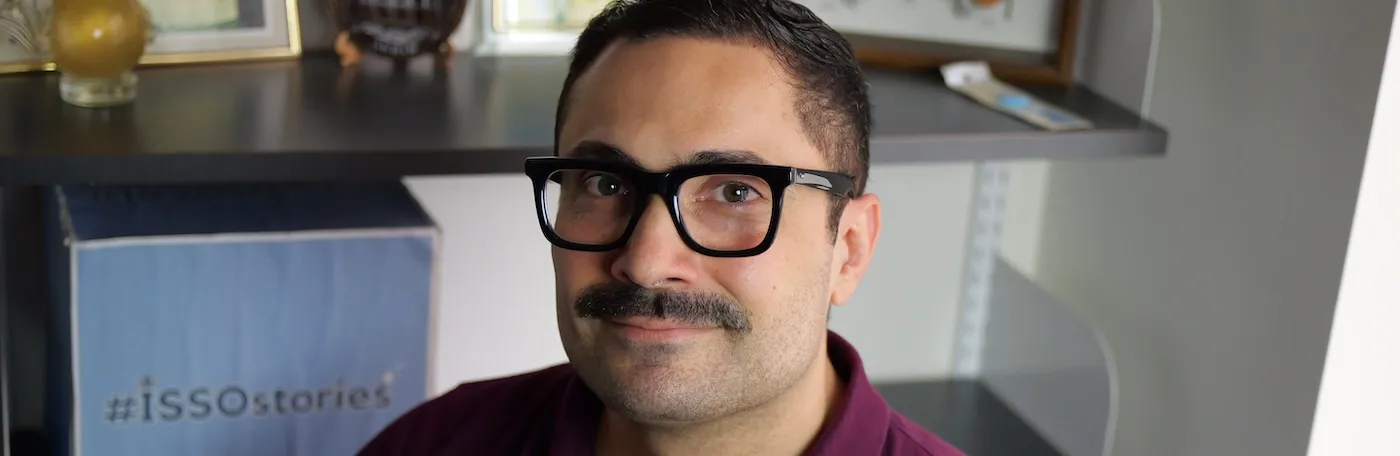
Hector Rodriguez Deniz, Postdoctoral Researcher in Data Science
Hi, my name is Hector Rodriguez. I am from Gran Canaria, one of the Canary Islands in Spain. Welcome to #ISSOstories.
Which Columbia program/department are you in?
I'm a postdoctoral research fellow at the Data Science Institute at Columbia, working in David Blei's lab. In the lab, we work on probabilistic machine learning, causal AI, and its applications. I am more into the side of causal AI and applications, so I develop probabilistic AI models to analyze the effects of interventions in panel and time-series data. These models could be used for policy evaluation, bioinformatics, or finance. It's a big umbrella!
Well, I'm a postdoctoral research fellow at the Data Science Institute at Columbia. I'm working in David Bligh's lab. In the lab, we work on probabilistic machine learning, causal AI, and its applications. I am more into the side of causal AI and application, so I develop statistical AI models for analyzing intervention from time serious data. It could be for policy evaluation, bioinformatics, or finance. It's a big umbrella!
Causal AI is the next generation of artificial intelligent systems. The typical example is: when it’s raining outside, you will see a lot of umbrellas open. But what would happen if everyone decides in the middle of the rain to close all their umbrellas? I mean, would the rain stop? Of course not. But for current machine learning and AI systems that we have, this is a very difficult question to answer. Current AI just learns correlation. They know that when there is rain, there are umbrellas, and when there is no rain, there are no umbrellas. But, they don't know what causes what. That is a much more difficult problem, because it requires the AI to learn structure. It's like, “What is first the rain or the umbrella?” Or “the chicken or the egg?” So we are trying to enable AI systems to think causally, so they are not just able to detect what corresponds with what, but actually what causes what.
What I am most proud of in coming to Columbia is that I was able to come here at all. I have to thank the [INSERT FOUNDATION NAME] Foundation who gave me a scholarship to come here. I think Columbia is a great place for doing research in AI. And in general, you have opportunities to work with the best. It has been a very academically rewarding experience. You have so many brilliant people with deep knowledge about your science in one place, which I think is so great. Similarly, being able to interact with the student community and with the university in general is also great. I'm quite proud
And what is the best part of living in New York? I would say the diversity is what I like the most. It's like having the entire world in just one city. People are quite open and talkative, even to outsiders. And the cultural offering is almost infinite.
Before I arrived, I would have liked to know how difficult it is to find an apartment here in New York City.
“If you have the power to fix one problem in the world, what would it be?” Getting peace and fairness in rights for as many people as possible.

Tell us about your research or projects at Columbia.
I would describe Causal AI as the next generation of artificial intelligent systems. A simple example is: when it’s raining outside, you will see a lot of umbrellas open. But what would happen if everyone decides in the middle of the rain to close their umbrellas? I mean, would the rain stop? Of course not. Current AI systems are very good at learning correlations. They learn that when it rains, people carry umbrellas, and when it doesn't rain, they don't. But they don't know why these patterns occur. They don't distinguish cause from effect. Causal AI aims to learn that underlying structure, enabling AI systems not only to recognize what tends to happen together, but also to reason about what causes what.
What is something you are proud of during your time at Columbia?
What I am most proud of in coming to Columbia is that I was able to come here at all. I have to thank the Knut and Alice Wallenberg Foundation from Sweden who gave me a scholarship to come here. I think Columbia is a great place for doing research in AI. And in general, you have opportunities to work with the best. It has been a very academically rewarding experience. You have so many brilliant people with deep knowledge about your science in one place, which I think is so great. Similarly, being able to interact with the student community and with the University in general is also great. I'm quite proud!
What is something that I wish I knew before I came here?
Before I arrived, I would have liked to know how difficult it is to find an apartment here in New York City.
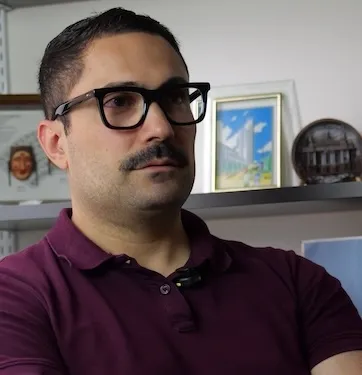
Attending Columbia has been a very academically rewarding experience. You have so many brilliant people with deep knowledge about your science in one place, which I think is so great.
What is the best part of living in New York?
The diversity is what I like the most. It's like having the entire world in just one city. People are quite open and talkative, even to outsiders. And the cultural offering is almost infinite.
If you have the power to fix one problem in the world, what would it be?
Getting peace and fairness in rights for as many people as possible.

Are you (or do you know) an international student, scholar, or alumni?
We’re looking to spotlight stories of academic or professional work, leadership, or personal adjustment to life at Columbia and NY in particular and the U.S. in general.
Submit our nomination form and we'll contact you with the next steps!